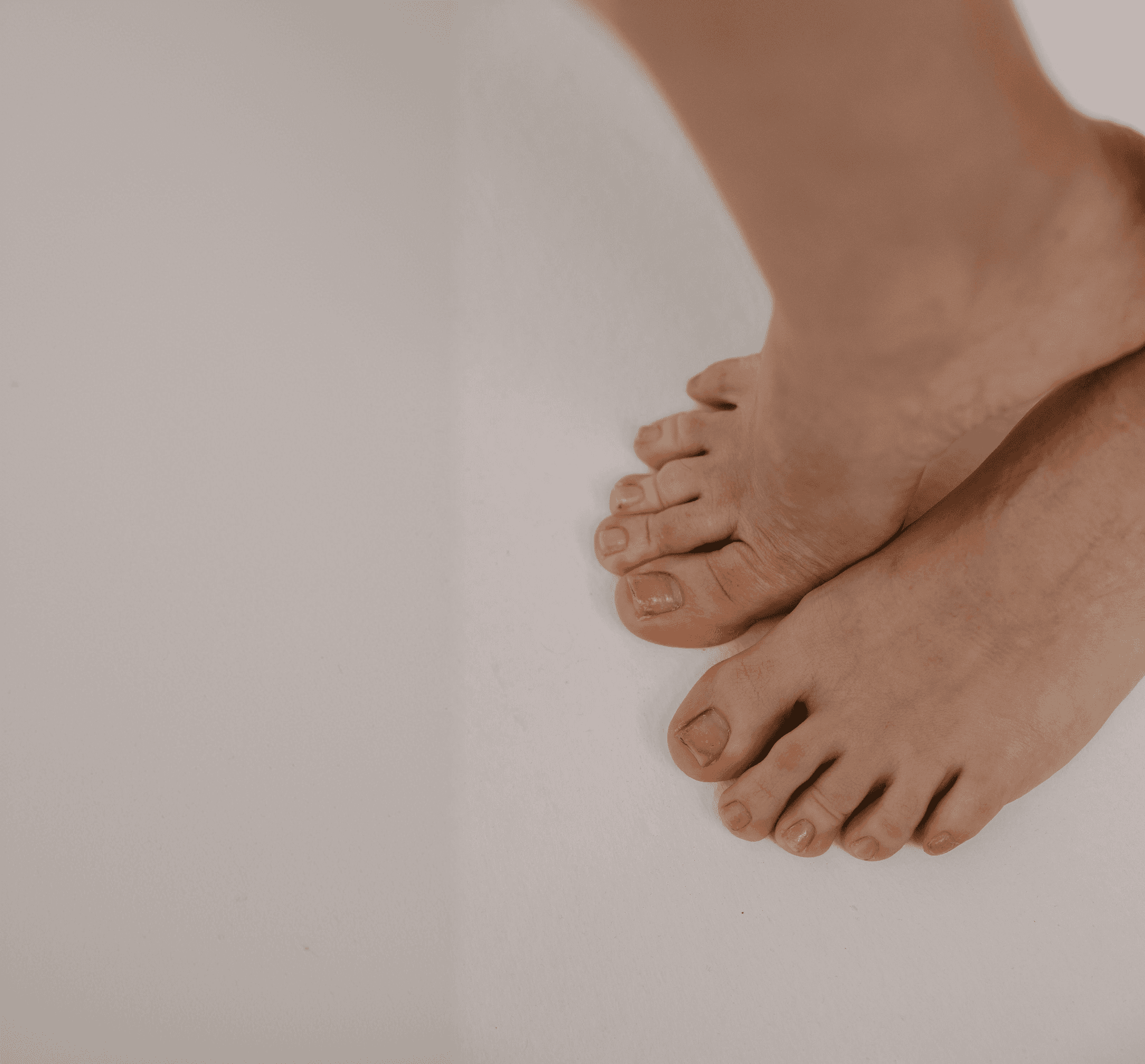
Problematic nails
Not a matter of care,
but a matter of treatment.
"Just enduring it is not the answer."
"Enduring it
is not the answer."
Recurring pain and inflammation,
are you dismissing it as a simple condition and leaving it untreated?
While trying to resolve it with home remedies or simple care
you may miss the golden time for treatment.
Treatment for problematic toenails begins with an accurate understanding of the condition.
Repeated pain and inflammation,
Are you dismissing it as a simple condition issue and
leaving it untreated?
While trying to solve it with folk remedies or simple care
you may miss the golden time for treatment.
Treatment for problematic nails
begins with accurately recognizing the condition.
What Is a Problematic Toenail?
Toenails cannot maintain their normal shape or function
and are accompanied by pain, inflammation, deformity, damage, etc.
causing inconvenience in daily life and reducing quality of life,
and can lead to health problems.
At Obliv Clinic, based on the medical staff's judgment
we treat ‘toenail fungus’ and ‘ingrown toenails’.
It refers to a condition in which the nails cannot maintain their normal shape or
function
and are accompanied by pain, inflammation, deformity, damage, etc.
causing inconvenience in daily life,
lowering quality of life,
and potentially leading to
health problems.
At Obliv Clinic,
depending on the medical staff's judgment,
we treat 'nail fungus' and 'ingrown toenails'.
It refers to a condition in which the toenails cannot maintain a normal shape or function,
accompanied by pain, inflammation, deformity, damage, etc.,
causing inconvenience in daily life, lowering quality of life,
and can lead to health problems.
At Obliv Clinic, depending on the medical staff's judgment,
‘toenail fungus’ and ‘ingrown toenails’ are treated.
Problem Nails [ Toenail Fungus ]
Toenail fungus is a disease in which a fungus called a dermatophyte
penetrates the hard keratin layer of the toenail and causes an infection.
It can rapidly spread and infect not only fingernails and toenails but also other areas of the skin, so
early diagnosis and treatment are important.
If nail fungus is left untreated for a long time, discoloration worsens
and changes such as the nails becoming excessively hard and thick occur.
In severe cases, it can even cause ingrown toenails, where the nail grows into the flesh.
Toenail fungus is a disease caused by a fungus called a dermatophyte that
penetrates the hard keratin layer of the toenail and
causes infection.
It can rapidly spread and infect not only fingernails and toenails but also other skin areas
so early diagnosis and treatment are important.
If nail fungus is left untreated for a long time,
discoloration worsens and the nails become excessively hard and
thick, among other changes occur.
In severe cases, the toenail can grow into the skin,
potentially causing an ingrown toenail.
If you have these symptoms,
you need to see a doctor.
※ If left untreated, the infected area may spread rapidly and the treatment period may become longer.
If you have symptoms, it is safest to seek medical attention early.
※ If left untreated, the infected area may spread rapidly
and the treatment period may become longer.
If you have symptoms, it is safest to seek medical attention early.
Form change
Toenail tips split or break
Toenails break easily
The surface becomes uneven and thickens
Form change
Toenail tips split or break
Toenails break easily
The surface becomes uneven and thickens
Color change
Toenail tip becomes yellow or black discolored
Overall discoloration, with loss of shine and transparency
White powder or streaks appear on the toenail
Sensory and other changes
Toenails grow slowly
Toenails become rough and develop an odor
Pain or a foreign-body sensation occurs in the affected area
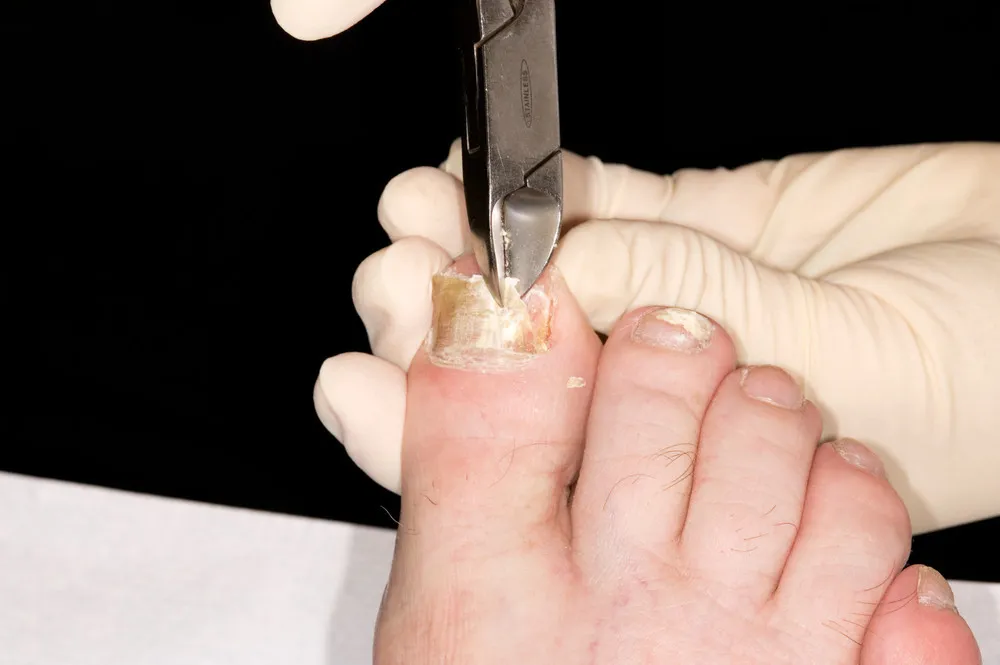
Onychomycosis
Staging Classification and Treatment Approaches
Toenail fungus is classified from stage 1 (early) to stage 5 (advanced) depending on the degree of symptom progression,
and the treatment method also varies by stage.
Toenail fungus is classified by the degree of symptom progression
from stage 1 (early) to stage 5 (advanced),
and the treatment method also varies depending on the stage.
Toenail fungus is classified according to the degree of symptom progression
from Stage 1 (early) to Stage 5 (advanced),
and the treatment method also varies depending on the stage.
| Weapon | Symptoms | Treatment Approach |
|---|---|---|
 Phase 1 (Initial) |
|
|
 Stage 2 (mild) |
|
|
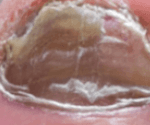 Stage 3 (moderate) |
|
|
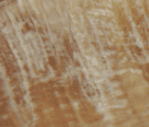 4th term (mid-course) |
| |
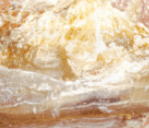 5th Cohort (Advanced) |
|
- Keeps nails transparent and shiny
- No noticeable abnormal symptoms
- In some cases, oral antifungal medication
- Yellow or white spots in some areas (tips, surface, around the cuticle)
- Transparent, with reduced shine
- Topical application of antifungal agent
- Used together with oral antifungal medication
- Dual-wavelength laser treatment
- Reduced gloss and transparency
- White and yellow spots on the surface
- Some fingernails and toenails are thinning and lifting.
- Thermal + dual-wavelength laser treatment
- Podoroge medical device application
- Combined topical and oral antifungal treatment with recurrence prevention management
- The entire item has turned yellow and become dull/discolored.
- Some parts are cracked or broken
- Thermal + dual-wavelength laser treatment
- Podoroge medical device application
- Combined topical and oral antifungal treatment with recurrence prevention management
- Overall thickening and worsening discoloration
- The toenail shattered into pieces and fell to the floor.
- Thermal + dual-wavelength laser treatment
- Podoroge medical device application
- Combined topical and oral antifungal treatment with recurrence prevention management
| Weapon | Symptoms | Treatment Approach |
|---|---|---|
Phase 1 (Initial) |
|
|
Stage 2 (mild) |
|
|
Stage 3 (moderate) |
|
|
4th term (mid-course) |
| |
5th Cohort (Advanced) |
|
* Treatment methods may vary depending on individual conditions.
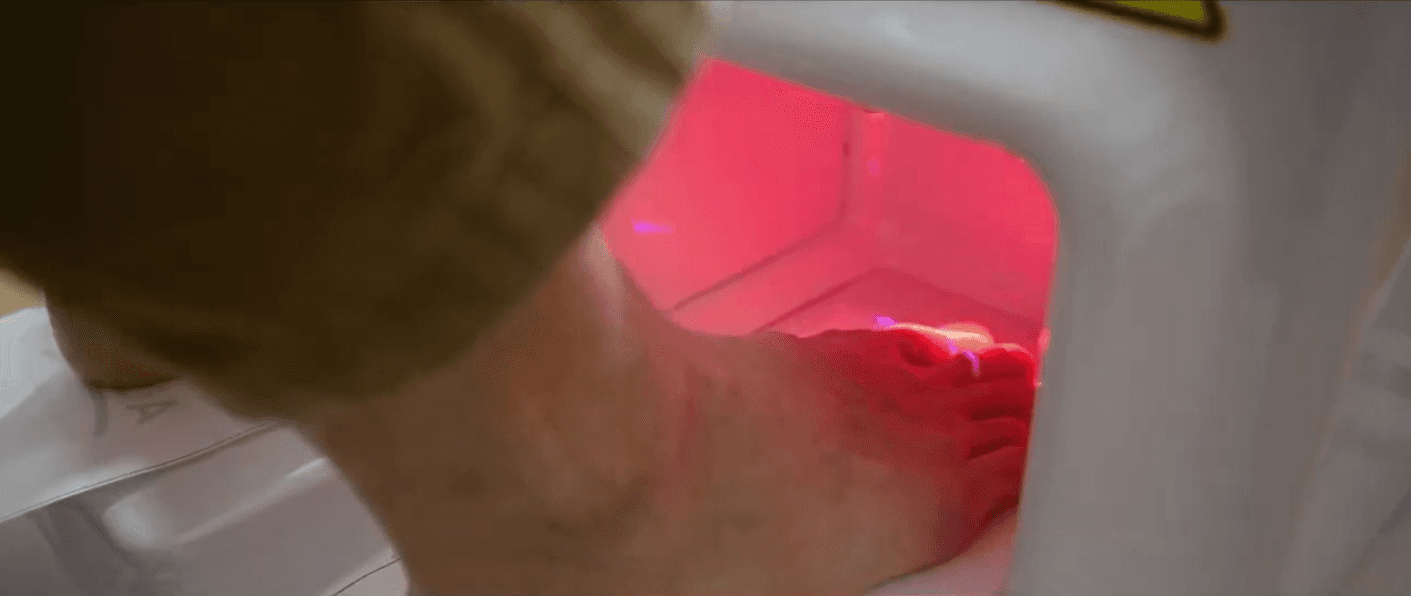
Obliv Toenail Fungus Treatment
Obliv Toenail Fungus Treatment
Toenails that don’t absorb medication well,
Obliv treats them precisely with laser therapy.
The reason athlete’s foot is difficult to treat is that
medication does not properly absorb into thickened toenails.
Obliv first tidies and softens the thickened toenails, then
directly targets the affected area with a dual-wavelength laser.
The laser beam reaches deep into the lesion,
eliminating the fungus even in areas that medication cannot reach
and promoting the regeneration of healthy cells.
Laser treatment is selectively performed depending on the patient’s condition,
and through consultation, we recommend the most suitable solution
among medication, laser, and combination therapy.
Preconditioning (preparation before laser treatment)
This is a process of smoothing the surface of toenails thickened by athlete’s foot to a uniform thickness, helping increase medication absorption at the pre-laser treatment stage.
Medical laser treatment
Using a dual-wavelength laser, we remove the fungus deep within the affected area, and if needed, we combine it with a heating laser to expand the treatment range.
Lifestyle Habits Correction and Home Care Guide
To help prevent recurrence of the condition, we review individual lifestyle habits such as walking habits, shoe selection, and hygiene management, and guide you on the proper care methods. We also check things like how you trim your toenails and provide guidance for daily care after treatment.
Personalized medication therapy
A topical treatment or oral antifungal medication is prescribed in combination, and the dosage and treatment duration are adjusted based on the condition of the patient's toenails and their overall health.
Preconditioning (preparation before laser treatment)
This is a process of smoothing the surface of toenails thickened by athlete’s foot to a uniform thickness, helping increase medication absorption at the pre-laser treatment stage.
Medical laser treatment
Using a dual-wavelength laser, we remove the fungus deep within the affected area, and if needed, we combine it with a heating laser to expand the treatment range.
Lifestyle Habits Correction and Home Care Guide
To help prevent recurrence of the condition, we review individual lifestyle habits such as walking habits, shoe selection, and hygiene management, and guide you on the proper care methods. We also check things like how you trim your toenails and provide guidance for daily care after treatment.
Personalized medication therapy
A topical treatment or oral antifungal medication is prescribed in combination, and the dosage and treatment duration are adjusted based on the condition of the patient's toenails and their overall health.
Laser Treatment Medical Device for Onychomycosis Improvement
Features of Dual-Wavelength Laser
Onychomycosis Improvement
Laser Treatment Medical Device
Dual-Wavelength Laser Features
Dual-wavelength laser uses 635nm and 405nm two beams to
generate reactive oxygen species (ROS) and adenosine triphosphate (ATP) in the nail and surrounding skin
without damaging the surrounding skin tissue, a treatment that selectively destroys only fungi.
The dual-wavelength laser uses 635nm and 405nm
two beams of light
to generate reactive oxygen species (ROS) and
adenosine triphosphate (ATP) in the toenail and surrounding skin
without damaging the surrounding skin tissue
a treatment that selectively destroys only fungi.
A dual-wavelength laser uses 635nm and 405nm two beams to
generate reactive oxygen species (ROS) and
adenosine triphosphate (ATP) in the toenail and surrounding skin,
without damaging the surrounding skin tissue,
a treatment that selectively destroys only fungal organisms.
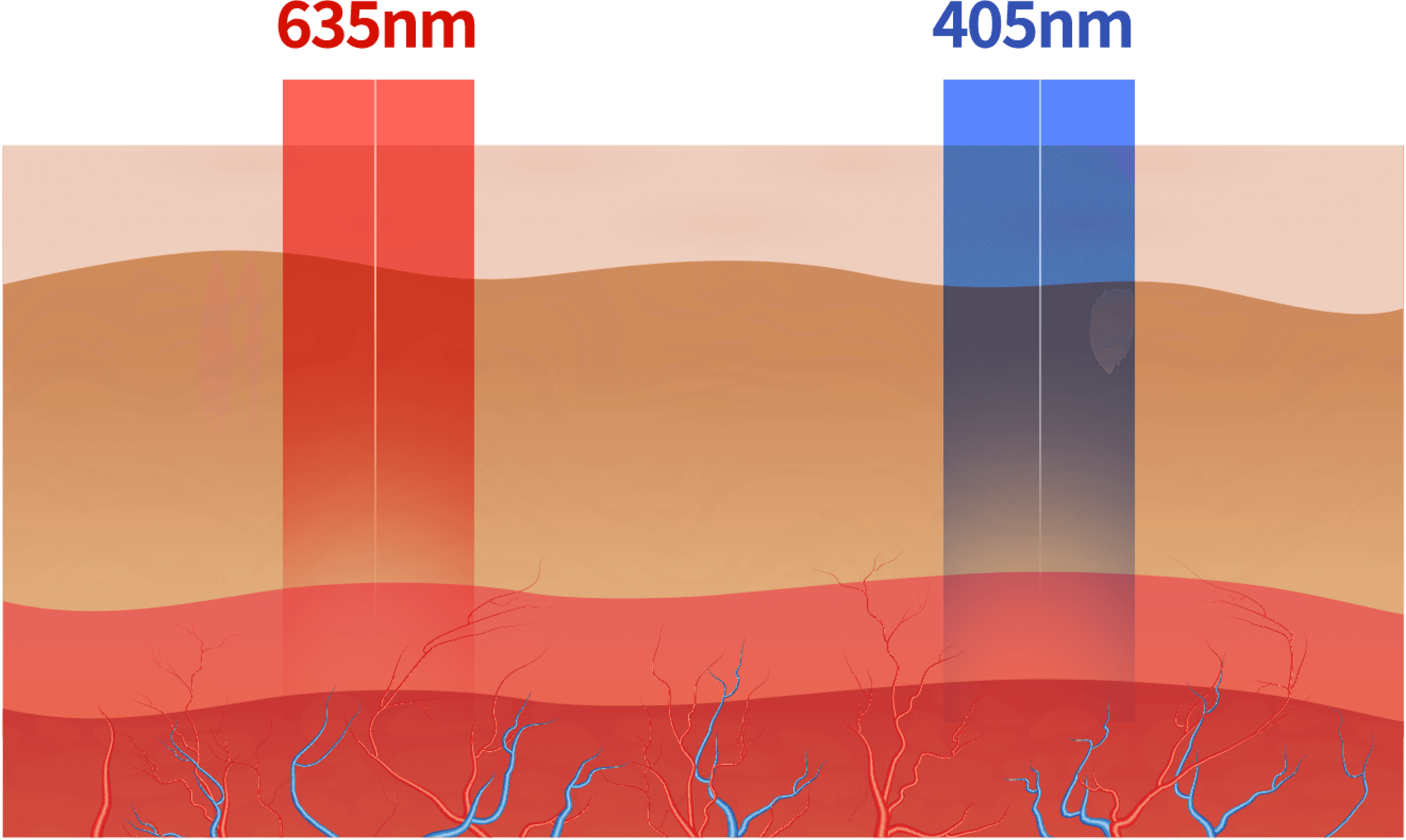
Increase in adenosine triphosphate
ATP (Adenosine Triphosphate)
Increased immune cells, blood flow, and cell regeneration
Generation of reactive oxygen species
ROS(Reactive Oxygen Species)
Fungal elimination of toenail fungus
Targets and removes only fungal germs, while safely protecting the skin and tissue.
Targets and removes only fungi,
while safely protecting the skin and tissue.
Advantages of Dual-Wavelength Laser Treatment

As an MFDS-certified medical device
Private insurance claims available, triphosphate increase
MFDS-certified
medical device
eligible for reimbursement claims under actual expense insurance
With an MFDS-certified medical device
actual expense insurance claims are possible

You can resume daily activities
immediately after the procedure

Patients with underlying conditions such as hypertension and diabetes
can also be treated at the same time
Even patients with underlying conditions such as hypertension and diabetes
can also receive simultaneous treatment

Even those who have difficulty taking medication due to impaired liver and kidney function
can also take it
Suitable even for people
who have difficulty taking medication
due to impaired liver and kidney function

Pregnant and breastfeeding women can
also be treated
*Whether treatment is possible and who is eligible will be determined after consultation with the attending medical staff.
*Discomfort that may occur after laser treatment may include warmth, tingling, dryness, itching, etc., but these will soon subside. Symptoms may vary from person to person, and please make sure you are fully aware of the precautions before the procedure.
*Eligibility for treatment and the appropriate candidates will be determined after consultation with the attending medical staff.
*Possible discomforts that may occur after laser treatment include warmth, a stinging sensation, dryness, itching, and more, but they will soon subside.
Symptoms may vary from person to person, and please make sure you are fully aware of the precautions before the procedure.
Before and After Laser Treatment
Changes in Toenail Fungus
Before the Procedure
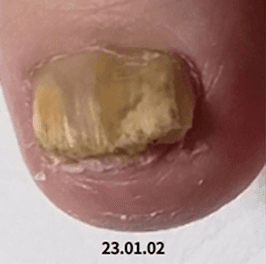
You can view reviews after logging in.
Mid-procedure
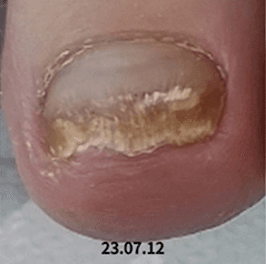
Treatment Review
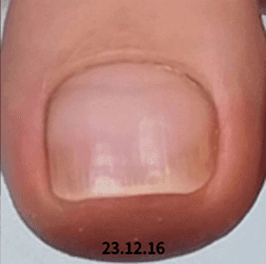
Before the Procedure
You can view reviews after logging in.
Mid-procedure
Treatment Review
Toenail Fungus FAQ
Toenail Fungus FAQ
Before the procedure,
we discuss the patient's worries and concerns.
How many treatment sessions do I need?
It varies depending on the condition of the toenail and the type of condition, but it takes several months for a normal toenail to grow back. The number and frequency of treatments are adjusted based on the medical staff’s diagnosis.
Is the pain severe during treatment?
Most treatments are performed without anesthesia, and preconditioning and laser treatments are generally almost painless. They can be adjusted based on your pain sensitivity, so there’s no need to worry.
Is this a treatment that involves removing the toenail?
No. Obliv’s guiding principle is non-surgical conservative treatment that does not remove the toenail. We combine corrective devices, medication, and lifestyle adjustments to help you recover naturally and safely.
Can I file a claim for indemnity health insurance?
Yes, if a disease code is registered after the treatment, you can file a reimbursement insurance claim for that treatment. (※ Whether this applies may vary depending on the insurer and policy terms.)
How is treatment for problematic toenails different at a clinic?
Obliv Clinic treats problem nails with a systematic program by addressing the root cause through a medical approach. There are clear differences in hygiene management, treatment plan design, use of MFDS-certified medical devices, and customized medication prescriptions.
Before the procedure,
we discuss your worries and concerns.
How many treatment sessions do I need?
It varies depending on the condition of the toenail and the type of condition, but it takes several months for a normal toenail to grow back. The number and frequency of treatments are adjusted based on the medical staff’s diagnosis.
Is the pain severe during treatment?
Most treatments are performed without anesthesia, and preconditioning and laser treatments are generally almost painless. They can be adjusted based on your pain sensitivity, so there’s no need to worry.
Is this a treatment that involves removing the toenail?
No. Obliv’s guiding principle is non-surgical conservative treatment that does not remove the toenail. We combine corrective devices, medication, and lifestyle adjustments to help you recover naturally and safely.
Can I file a claim for indemnity health insurance?
Yes, if a disease code is registered after the treatment, you can file a reimbursement insurance claim for that treatment. (※ Whether this applies may vary depending on the insurer and policy terms.)
How is treatment for problematic toenails different at a clinic?
Obliv Clinic treats problem nails with a systematic program by addressing the root cause through a medical approach. There are clear differences in hygiene management, treatment plan design, use of MFDS-certified medical devices, and customized medication prescriptions.
Obliv Clinic Problem Nail Clinic