
Volume restoration starting from the foundation deep within the skin.
The order of filling
determines the result.
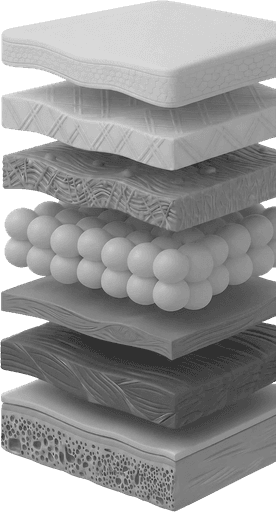
Applicable skin layer
1
Epidermis — color, protective barrier
2
Upper dermis — texture, moisture
3
Lower dermis — elasticity
4
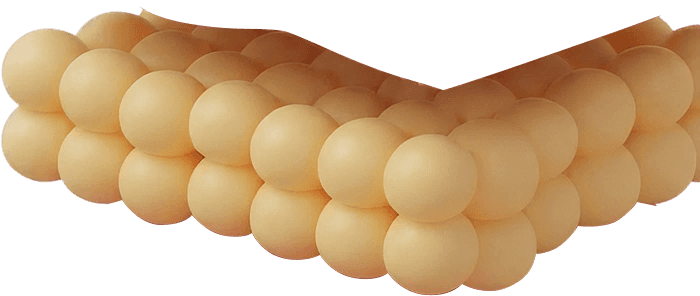
Fat layer — volume
5
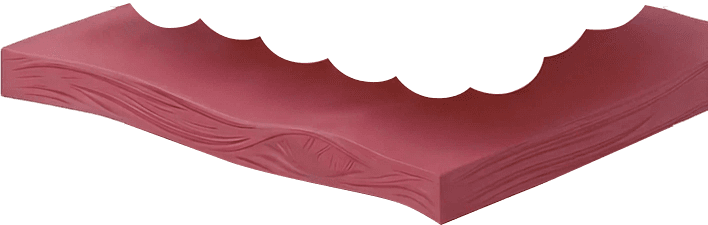
Fascia — supporting membrane
6
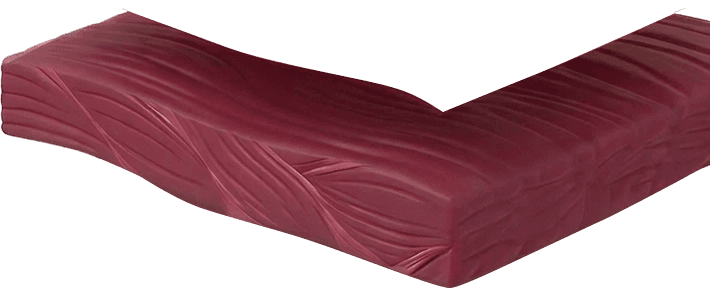
Muscle — Balance
7
Bone — Basics
If you have these concerns
Even the "hollowing" that looks similar has different causes for each person.
Some lose fat, some experience changes in muscle, some lose skin elasticity, and so on—there are many different reasons.

Sunken cheeks make you look older.
Layer 4
Fat layer (inner)

The nasolabial folds are getting deeper.
Layer 4
Fat layer (outer)

The temples are
sunken and you look tired
Layer 7
Bone and fat indentation

Injection order issue
Obliv's Treatment Guide
Even though these changes may look the same, the causes are different. First, check which layer the problem is in.
Why do volume and shape change:
Because the three layers change simultaneously
If we explain the ongoing changes one by one, they are as follows.
*The pattern of change may vary depending on the person.
LAYER 4 · Fat layer
In the fat layer,
three changes occur simultaneously
The center of the cheeks hollows first, the jawline becomes less defined, and the nasolabial folds deepen. The reason that, even among people of the same age, some start to break down from the cheeks while others start from the jaw is that the relative weight of these three changes differs.
LAYER 6 · Muscle
The facial muscles begin to shift out of alignment vertically.
A face that was an inverted triangle in your 20s looks square in your 40s. It’s not that the face has become wider; rather, as the balance of the muscles changes, the relative impression of the cheekbones and jaw changes.
LAYER 7 · Bone
I didn’t know it, but my bones are shrinking too.
The eyes look sunken, the middle of the face flattens, and the jawline angle widens. This is because the bone itself beneath the skin and flesh is shrinking. When the bone changes, every layer above it collapses with it.
We design from the deeper layers.
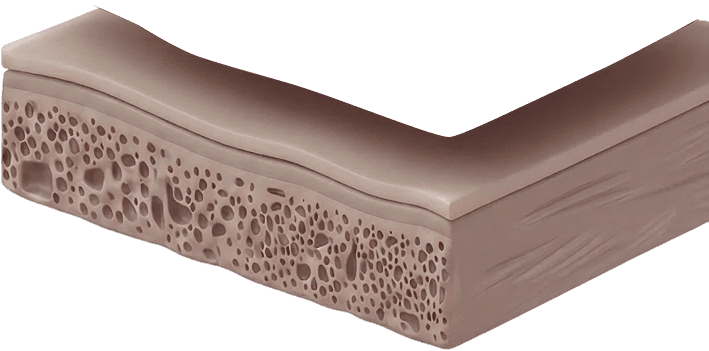
01
Right above the bone
The stage where you lay the "foundation" again on top of the collapsed bones. If this part is left empty, it will feel awkward no matter how much you fill in the layers above.
02
subcutaneous
Rebuild the lower line. Secure a pathway that lifts the tissue upward.
03
Subcutaneous (fat layer)
Adjusts the volume. As deep layer support is restored, this layer’s requirements also decrease.
04 · Last
Inside and around the muscle
Fine-tune the surface balance. Relaxing overactive tension with Botox makes the overall lines look more natural.
Place structural support first in the deep layer just above the bone, then adjust the volume in the fat layer.
If deep-layer support is restored first, you can also expect the surface fat that had sagged downward to return to its original position.
Oblieve's Volume · Shape follows the principle of a dual-plane approach in the order of deep layer (just above the bone) → shallow layer (fat layer).
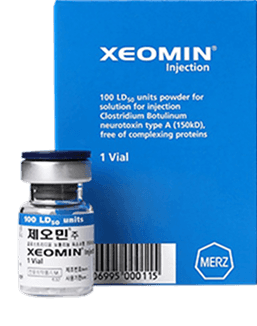
NEUROMODULATOR · Muscle
Botox
LAYER 6 · In and Around Muscles
This is not a procedure to remove wrinkles. It is a structural treatment that relaxes overly tense muscles and restores facial balance.
How
Selective relaxation of overactive muscles with botulinum toxin. Used for contour correction (square jaw, V-line), wrinkle reduction, and improving muscle balance.
DERMAL FILLER · Dual Plane
Filler
LAYER 4 · 7 · Dual-plane injection
This is a procedure that adds volume. The depth at which it is injected determines the result.
How
Apply HA (hyaluronic acid) or CaHA (calcium hydroxyapatite) fillers differently depending on injection depth. First rebuild structural support in the deep layer just above the bone, and then correct surface volume in the fat layer. CaHA induces the body's own collagen production along with immediate volume.

THREAD LIFTING · Physical Traction
Mint room
LAYER 5 · Fascial layer traction
This method lifts sagging tissue directly with threads. It is effective for sagging areas that are difficult to reach with equipment.
How
Using barbed threads made of PDO (polydioxanone) to physically lift tissue from deeper layers. A lifting effect appears immediately after the procedure, and collagen production is stimulated as the threads dissolve.

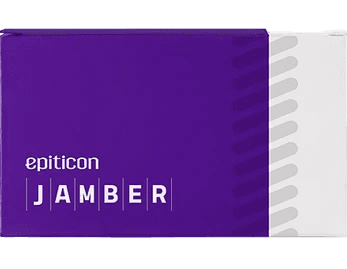
THREAD LIFTING · Spring type
Jaembeosil
LAYER 5 · Fascial Layer · Volume Restoration
Unlike mint threads, its spring structure allows it to do more than just lift—it can also help restore volume.
How
PDO spring (scaffold) thread. Its dense structure increases the surface area of contact with tissue to promote collagen regeneration, and as it degrades, it helps remodel the ligament and surrounding tissue network.
FAQ
Frequently Asked Questions
Can I return to my daily life right away after the procedure?
You can go about your daily life on the same day after Botox and filler procedures. For 4–6 hours after treatment, be careful not to touch or press the treated area, and please avoid saunas, alcohol, and strenuous exercise on the day of the procedure.
When do the effects start to show after Botox treatment?
Results begin to appear 3 to 7 days after the procedure, and the maximum effect appears around 2 weeks later. The average duration lasts 4 to 6 months.
Can I get a thread lift and fillers at the same time?
Yes, they can be used together. Thread lifting physically lifts sagging tissue, while fillers are used to restore lost volume, so the approach is different. At Obliv, we design the optimal combination after diagnosing the tissue layers.
How long do the effects of filler treatment last?
HA (hyaluronic acid) fillers typically last 6–18 months, and CaHA (calcium hydroxylapatite) fillers typically last 12–18 months. Duration varies depending on injection depth and area, as well as individual metabolic rate.
How are Botox and fillers different?
Botox relaxes overactive muscles with botulinum toxin to improve wrinkles and refine facial contours. Fillers work by directly adding volume material to sunken areas. Obliv follows a dual-plane approach, filling first the deep layer just above the bone and then the fat layer.