ESWT

Extracorporeal shock wave

Extracorporeal Shock Wave Therapy

Delivering high-energy shock waves to damaged tissue (muscles, tendons, ligaments, joints)
a non-invasive treatment that relieves the root cause of pain

Shockwave Therapy's Core Principles and Features
1/

Stable in the treatment of various musculoskeletal disorders,
an effective treatment with a very low risk of side effects


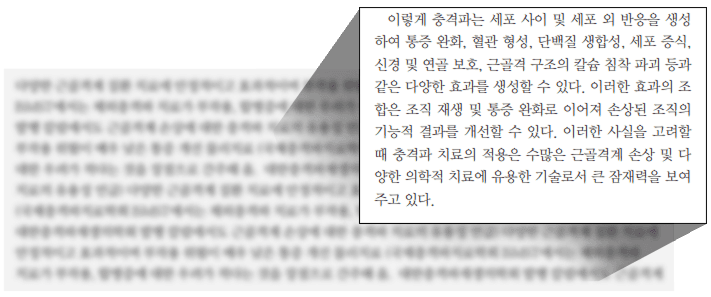
The International Society for Medical Shockwave Treatment (ISMST) has emphasized the advantages of extracorporeal shock wave therapy, noting that it has a low risk of side effects and complications.
In a column published by the Korean Society of Shockwave Regenerative Medicine, you can also confirm that shock wave therapy is useful in the treatment of musculoskeletal injuries.

1/

For the treatment of various musculoskeletal disorders
stable, effective and with a very low risk of side effects


The International Society for Medical Shockwave Treatment (ISMST) has emphasized the advantages of extracorporeal shock wave therapy, namely that it has a low risk of
side effects and complications.
In a column published by the Korean Society of Shockwave Regenerative Medicine, you can also see that shock wave therapy is useful in treating musculoskeletal injuries.

Reference: J Korean Orthop Assoc 2024; 59: 235-246_Current Concepts in Extracorporeal Shock Wave Therapy
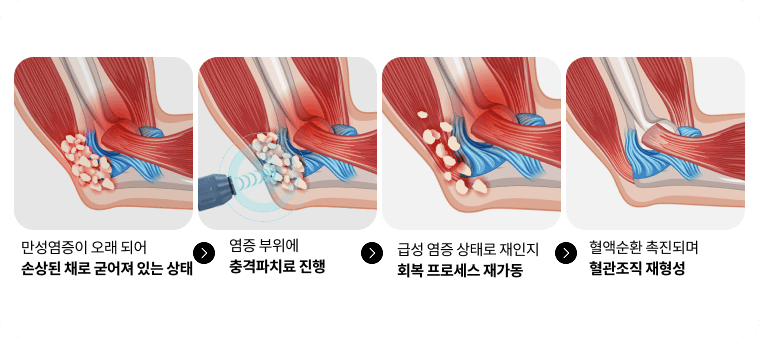
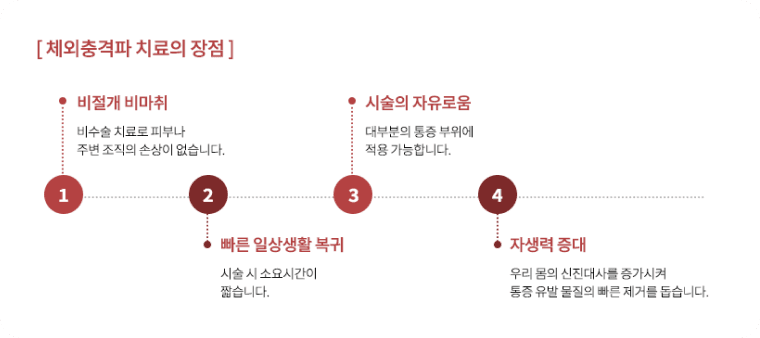
2/

Delivering high-energy shock waves to the lesion
A treatment that promotes regeneration and self-healing


By delivering 1,000~1,500 shock waves to the injured area
and applying microscopic mechanical stimulation, it directly stimulates the lesion area that causes pain
to activate the body's self-healing ability.

This is a technique that helps restore injuries to joints, tendons, and ligaments
that had not improved even with anti-inflammatory drugs, local injection therapy, rehabilitation therapy, and more.

2/

Delivering high-energy shock waves to the lesion
A treatment that promotes regeneration and self-healing


By delivering 1,000~1,500 shock waves to the injured area
and applying subtle mechanical stimulation, it directly stimulates the lesion causing pain
to activate self-healing abilities.

This is a technology that restores injuries to joints, tendons, ligaments, and more
that did not improve even with
anti-inflammatory drugs, local injection therapy, rehabilitation therapy, and similar treatments.

3/

Not medication or injections
Non-surgical, non-incisional, non-invasive treatment


As a non-invasive treatment, there is no need to worry about scars, and it can be applied to most pain areas such as the shoulder, elbow, lower back, neck, knee, and ankle.
The treatment time is also relatively short, at about 20 to 40 minutes.

You can return to daily life immediately after the procedure, and since there is almost no separate recovery period, you can receive repeat treatments.

* Extracorporeal shock wave therapy is performed after a doctor's consultation.

3/

Not medication, not injections
Non-surgical, non-incisional, non-invasive treatment


With non-invasive treatment, there is no need to worry about scarring, and it can be applied to most pain areas such as the shoulder, elbow, lower back, neck, knee, and ankle.
The treatment time is also relatively short, at about 20 to 40 minutes.

You can return to daily life immediately after the procedure, and because there is almost no separate recovery period, repeated treatments are possible.

* Extracorporeal shock wave therapy is performed after a doctor's consultation.

Types of Shock Waves
Radial (Divergent) vs Focused (Concentrated)

Category

Radial type (Radial)
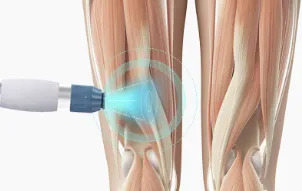
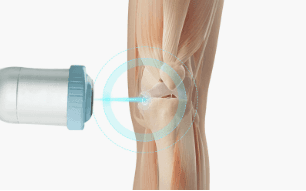
Medical image explaining how extracorporeal shock wave therapy is delivered to knee tissue

Focused type (Focused)

An image showing the treatment principle of delivering extracorporeal shock waves to the joint area

Energy transfer method

Energy
transfer method

Transmits impact by striking the pellet with compressed air.

Focus supersonic sound waves to a single point with electrical/magnetic energy

Energy distribution

Energy
Distribution

Widespread on the surface (diffuse type)

Spreads widely over the surface
(diffuse type)

Deep delivery to a single point (focused)

Delivered deeply to a single point
(concentrated type)

Depth Reached

0.5 to 3 cm (fascial, muscle-centered)

0.5 ~ 3cm
(fascia, muscle center)

3 to 6 cm or more (centered on tendons, ligaments, and periosteum)

3 ~ 6 cm or more
(centered on tendons, ligaments, and periosteum)

Stimulation intensity

Soft and broad

Deep, intense stimulation

Treatment effect

Effective for muscle and fascia relaxation

Effective for muscle and fascia relaxation
effect

Effective for localized inflammation and wound healing

Effective for localized inflammation,
effective for wound healing

Indications and Procedure Site

Myofascial pain, muscle tension, trigger points, improved blood circulation, etc.

Chronic tendinitis, calcific tendinitis, ligament injury, tennis elbow, golfer's elbow, patellar tendinitis, etc.

Chronic tendonitis,
calcific tendinitis, ligament injury, tennis elbow, golfer's elbow, patellar tendinitis, etc.

Perceived feeling

A tapping, spreading feeling

A tingling, focused feeling
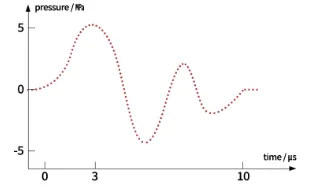
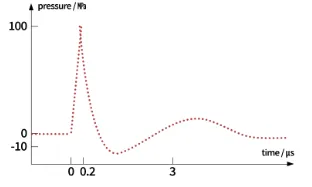
Shock wave waveform

Interferential wave
waveform

Graph showing changes in the pressure waveform during extracorporeal shock wave therapy
Graph explaining pressure changes in extracorporeal shock wave energy transmission

According to the stage of tissue damage
Shock Wave Therapy Golden Time

When tissue is damaged, our body, in order to recover itself,
goes through staged phases called the acute, subacute, and chronic stages.
During this process, blood flow and metabolic activity increase, and cellular activity and growth factor secretion, etc.

The body's natural healing response appears.

Why Shockwave Therapy Is Used Starting in Stage 2 of the Subacute Phase

Because shockwave therapy works by applying subtle mechanical stimulation to tissue to induce micro-damage,
it is not recommended during the acute phase, when heat, swelling, and pain are severe, because shockwave therapy may worsen pain and inflammation.

When shockwave therapy is used from the subacute phase, which is stage 2, to the chronic phase, which is stage 3,
the speed of tissue regeneration and inflammation healing is accelerated.

[ Golden Time for Shockwave Therapy According to the Stages of Disease Progression in Rehabilitation Treatment ]

[ Golden Time for Shockwave Therapy Depending on the Stage of Disease Progression in Rehabilitation Treatment
]

Shock Wave Therapy's
Golden Time

Stage 1, acute phase (0–3 days)

Inflammatory cells and increased blood flow for 72 hours after tissue damage

For 72 hours after tissue damage
inflammatory cells, increased blood flow

Stage 2: Subacute phase (3 to 14 days)

Tissue regeneration accelerates with the formation of new blood vessels and fibroblasts

Tissue regeneration accelerates with the formation of new blood vessels and fibroblasts

Stage 3 chronic phase (2 to 6 weeks)

Restoring the strength and elasticity of new tissue

Treatment Cycle Guide

Starts from the subacute phase after injury
(after the acute phase(inflammatory phase))

Treatment recommended once a week, for a total of 5 or
10 sessions

Reduced recurrence rate with repeated maintenance treatment over a certain period

A method performed alternately
with manual therapy

Recommended candidates for treatment
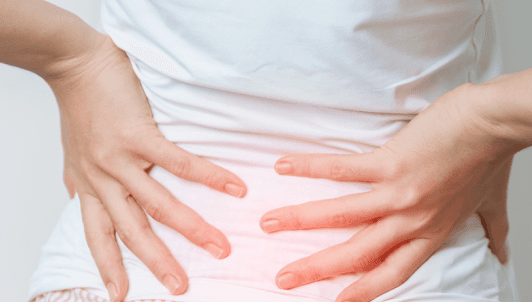
Those with chronic shoulder, neck, back, elbow, knee pain, etc.
and difficulty with daily life
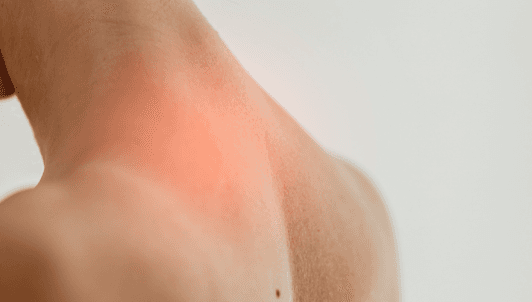
People who want fundamental physical recovery without surgery
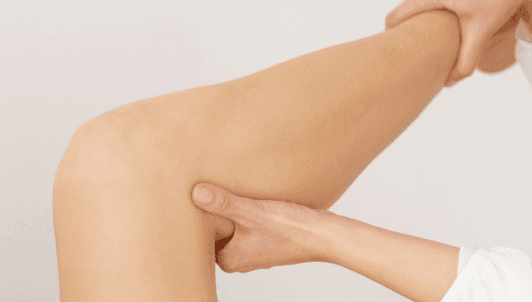
For those who want to speed up tissue recovery during rehabilitation therapy

■ Information on physical reactions that may occur after treatment

Although it varies from person to person, you may feel more stiffness than usual or flu-like body aches for 1–2 days after treatment. However, if the muscle pain continues even after some time, please call our clinic and come in for a visit.

Shock Wave Therapy FAQ

Before the procedure,
we share your concerns and worries.

Is there any pain after the procedure?

Depending on the level of pain in the treatment area, you may feel some mild discomfort during treatment. However, the treatment time is not long, so most patients, including older adults, can undergo the procedure with little discomfort. In addition, if you experience any discomfort during the procedure, the treatment intensity can be adjusted in real time.

Are there any symptoms that appear after the treatment is over?

Most patients experience a reduction or disappearance of pain after treatment. However, some may feel throbbing at the treatment area and muscle soreness for about 2 to 4 hours after the procedure, but these symptoms are temporary and will naturally ease over time.

Are there any precautions after treatment?

For 48 hours after treatment, it is advisable to avoid strenuous physical activity and, in particular, refrain from overusing the treated area.

Shockwave Therapy Precautions

Do not perform if there is a malignant tumor in the area being treated with shockwave therapy.

Shock wave therapy is not performed if there is a fetus in the treatment area.

This procedure is not performed if there is a pacemaker or defibrillator in the shockwave treatment area.

Caution is needed if you have a serious blood clotting disorder.

Treatment must be carried out only under the diagnosis and prescription of medical professionals who are familiar with the principles and indications.

After the procedure, you may experience temporary pain or bruising, but in most cases it goes away within 1 to 2 days.

It is a normal reaction that can occur during the healing process when an inflamed or damaged area is irritated,
and it often subsides when you take the prescribed medication or apply a cold compress to the treatment area.

Business name

Obliv Clinic

Representative

Park Young-jin

Main phone number

032-851-9119

Address

3F, 34 Incheontower-daero 132beon-gil, Songdo-dong, Yeonsu-gu, Incheon Metropolitan City

Business Registration Number

457-23-00938

Email

obliv.contact@gmail.com

Non-covered Fee Schedule

All content of Obliv Clinic is protected for 5 years from the date of its first creation pursuant to the [Content Industry Promotion Act].

All works created by Obliv Clinic are protected by copyright under applicable laws, so unauthorized use without permission may result in civil damages liability, as well as

We inform you that, pursuant to Article 40 of the Content Industry Promotion Act, you may be subject to punishment of up to 1 year in prison or a fine of up to KRW 20 million.

All content of Obliv Clinic is protected for 5 years from the date of first production in accordance with the [Content Industry Promotion Act].

The copyrights of all works produced by Obliv Clinic are protected by applicable laws, so unauthorized use without permission may result in civil liability for damages and, pursuant to Article 40 of the Content Industry Promotion Act, may be punishable by imprisonment of up to one year or a fine of up to 20 million won.

Business name

Obliv Clinic

Representative

Park Young-jin

Main phone number

032-851-9119

Address

3F, 34 Incheontower-daero 132beon-gil, Songdo-dong, Yeonsu-gu, Incheon Metropolitan City

Business Registration Number

457-23-00938

Email

obliv.contact@gmail.com

Non-covered Fee Schedule

Business name

Obliv Clinic

Representative

Park Young-jin

Main phone number

032-851-9119

Address

3F, 34 Incheontower-daero 132beon-gil, Songdo-dong, Yeonsu-gu, Incheon Metropolitan City

Business Registration Number

457-23-00938

Email

obliv.contact@gmail.com

Non-covered Fee Schedule

All content of Obliv Clinic is protected for 5 years from the date of its first creation pursuant to the [Content Industry Promotion Act].

All works created by Obliv Clinic are protected by copyright under applicable laws, so unauthorized use without permission may result in civil damages liability, as well as

We inform you that, pursuant to Article 40 of the Content Industry Promotion Act, you may be subject to punishment of up to 1 year in prison or a fine of up to KRW 20 million.